⚡ Key Takeaway
A crypto wallet is a tool — either software or hardware — that stores your private keys and lets you send, receive, and manage cryptocurrency. It does not hold your coins directly; your coins always live on the blockchain. The two main types are hot wallets (internet-connected, convenient) and cold wallets (offline, more secure). Top picks for 2025 include Trezor, Ledger, Exodus, MetaMask, and Coinbase Wallet.
If you have ever asked yourself, “How does cryptocurrency how does it work when it comes to storage?” — you are not alone. Every person who steps into the world of crypto eventually faces the same question: where do I actually keep my digital currency?
The answer is a cryptocurrency wallet. Whether you are buying crypto for the first time or you are a seasoned trader managing a full portfolio, understanding how wallets work is not optional — it is essential. In this guide, we break down everything you need to know, from the basics to the best wallets on the market today.
What Is a Crypto Wallet?
A crypto wallet is an application or physical device that stores the private keys needed to access your cryptocurrency on the blockchain. Think of it like a traditional wallet — but instead of holding cash, it holds the cryptographic credentials that prove you own your digital assets.
Here is the part most beginners get confused about: your cryptocurrency is never actually inside the wallet. Your Bitcoin, Ethereum, or any other crypto coin always exists on the blockchain itself. What the wallet holds is your private key — the secret code that gives you permission to move those funds.
Lose your private key without a backup, and access to your assets is gone forever. That is why choosing the right wallet — and understanding how to use it safely — matters so much when you are buying crypto or managing a long-term cryptocurrency investment.
The very first crypto wallet belonged to Satoshi Nakamoto, the pseudonymous creator of Bitcoin. The second was owned by Hal Finney, the pioneering developer who received ten BTC from Nakamoto in what became the first real Bitcoin transaction. That small test transfer kicked off the entire cryptocurrency marketplace we know today.
Hot Wallets vs. Cold Wallets: What Is the Difference?
All cryptocurrency wallets fall into one of two broad categories: hot wallets and cold wallets. Understanding the difference is the single most important decision you will make when it comes to crypto security.
| Feature | Hot Wallet | Cold Wallet |
|---|---|---|
| Internet connection | Always online | Offline |
| Convenience | High — great for daily trading | Lower — needs physical device |
| Security | Moderate | Very high |
| Best for | Active traders, small amounts | Long-term holders, large amounts |
| Examples | MetaMask, Trust Wallet, Coinbase Wallet | Ledger, Trezor, SafePal |
| Cost | Usually free | $49 – $249+ |
What Is a Hot Wallet?
A hot wallet is any cryptocurrency wallet that is connected to the internet. These include desktop apps, mobile apps, and browser extensions. Because they are always online, hot wallets make it fast and easy to access your funds, send transactions, and interact with decentralized apps (dApps) — which makes them the go-to choice for active trading on a crypto trading platform.
The trade-off is security. Because hot wallets live online, they are more exposed to hacking, phishing attacks, and malware. Most reputable hot wallets use strong encryption and two-factor authentication to reduce this risk, but they are still considered less secure than offline alternatives.
What Is a Cold Wallet?
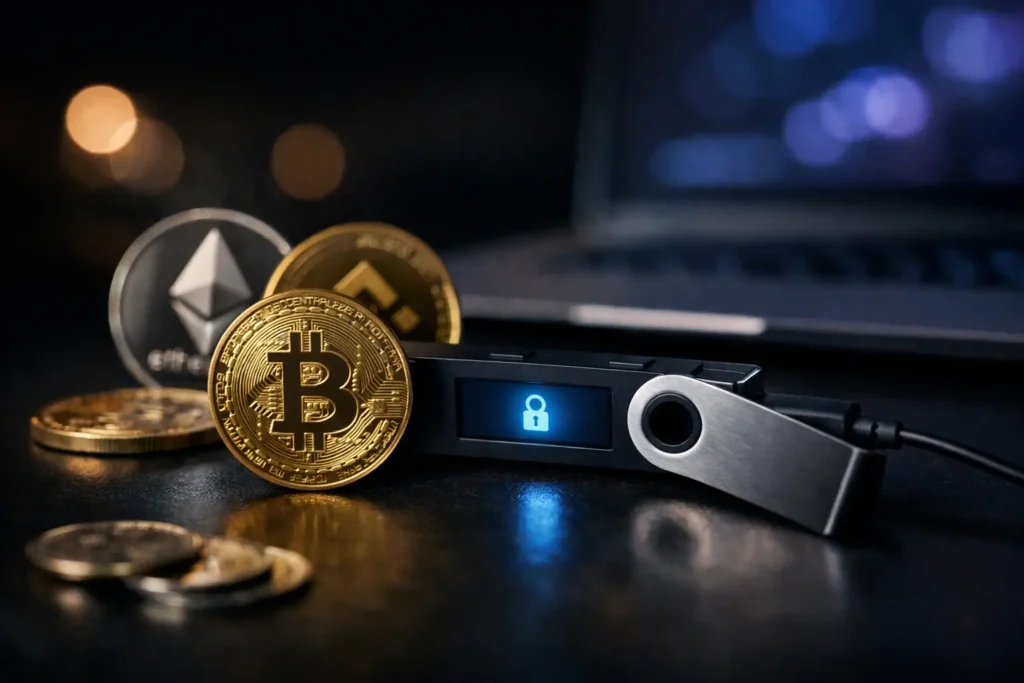
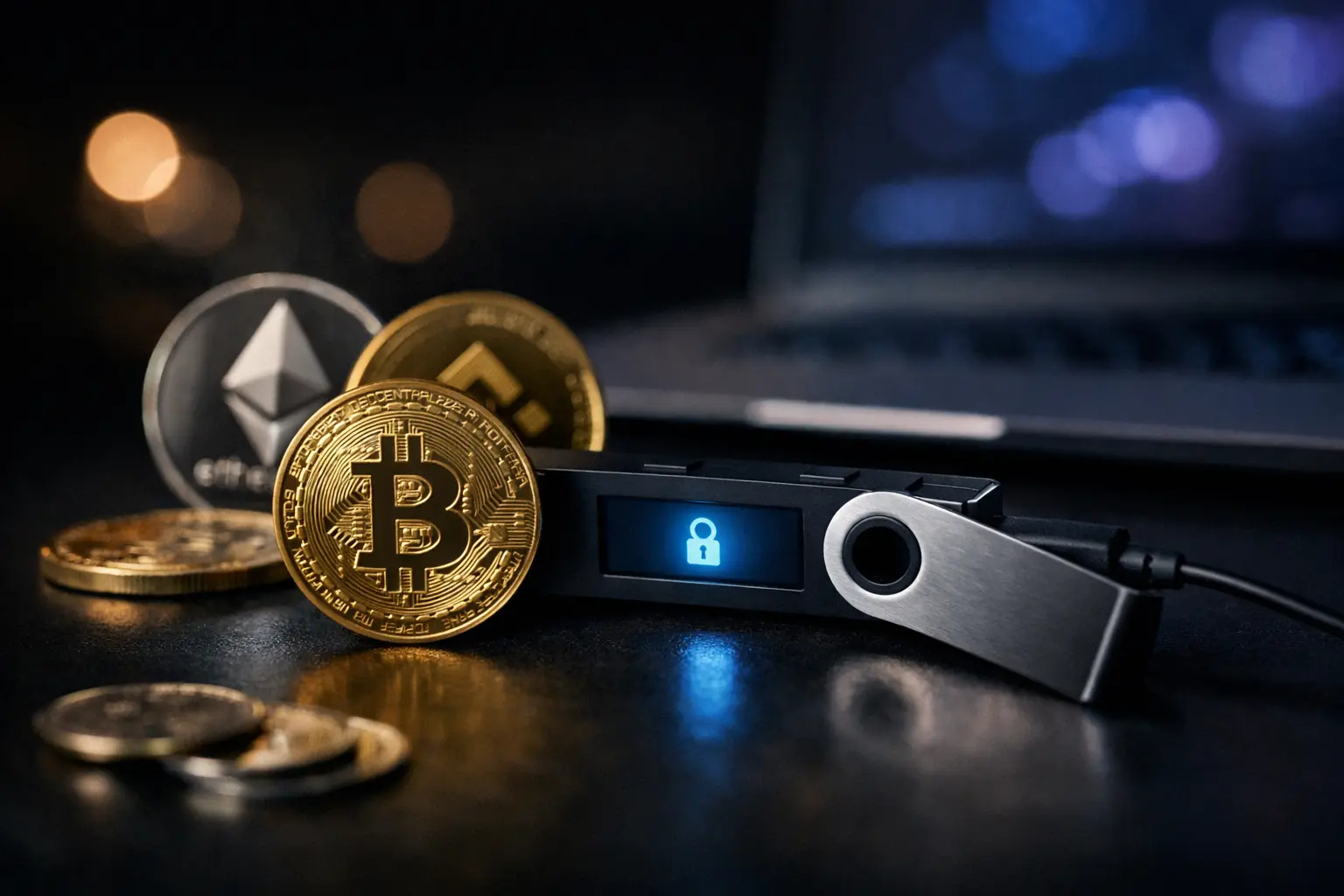
A cold wallet — also called a hardware wallet or non-custodial wallet — stores your private keys completely offline. They typically look like USB drives and only connect to the internet when you plug them into a computer or phone to sign a transaction.
Because your private keys never touch the internet, cold wallets are widely regarded as the safest way to store large amounts of cryptocurrency. They are especially popular among investors who are holding digital assets for the long term and do not need frequent access.
The 5 Best Hardware (Cold) Wallets of 2025
1. Trezor
Trezor is one of the most trusted names in cold storage. Its flagship devices — the Model One (around $49) and the Safe 5 (around $169) — offer industry-leading offline security and support a wide range of crypto coins. The touch screen on the Safe 5 allows you to confirm transactions directly on the device without ever exposing your keys to a connected computer. Trezor integrates with popular software wallets like Exodus and offers both a desktop client and a mobile app (Trezor Suite Lite) for Android and iOS.
2. Exodus
Launched in 2016, Exodus is a non-custodial software wallet that supports thousands of crypto coins and tokens. It stands out for its beautifully designed interface and built-in exchange, which lets you swap one cryptocurrency for another without leaving the app. Exodus also supports staking, meaning you can earn passive income directly from your wallet. For enhanced security, Exodus integrates with Trezor hardware devices, combining the best of both worlds — the convenience of a software wallet and the security of cold storage.
3. Ledger
Ledger is perhaps the most recognized brand in hardware wallets. With two main models — priced between $79 and $249 — Ledger supports over 5,500 digital assets and offers a polished desktop and mobile app called Ledger Live. The device enables two-factor authentication and multisignature security, and you can use it to buy, stake, and swap currencies directly. It also integrates with popular decentralized finance (DeFi) platforms.
4. SafePal
Backed by Binance Labs, SafePal was founded in 2018 and has grown to serve over seven million users worldwide. Its S1 hardware wallet retails for $49.99 and supports more than 100 blockchains, including both EVM and non-EVM networks. The SafePal mobile app allows you to manage, trade, and swap assets with ease, making it an excellent entry-level option for those new to buying crypto or exploring the cryptocurrency marketplace.
5. KeepKey
KeepKey is an open-source hardware wallet that has dramatically reduced its price over the years — now selling for around $50. Because its code is publicly available for anyone to audit, it offers an extra layer of community-verified trust. KeepKey integrates with ShapeShift and various dApps, making it a flexible choice for users who want affordable cold storage without sacrificing functionality.
The 5 Best Mobile (Hot) Wallets of 2025
Hardware wallets are the gold standard for security, but they are not the most convenient option for everyday cryptocurrency trading. Mobile wallets solve that problem by offering fast, easy access to your funds right from your phone.
1. Coinbase Wallet
Created by the well-known US-based crypto exchange, Coinbase Wallet is a self-custody wallet — meaning you, not Coinbase, control your private keys. It supports Bitcoin, Ethereum, Litecoin, ERC-20 tokens, NFTs on Ethereum and Polygon, and a wide range of other digital currencies. The app is beginner-friendly but powerful enough for advanced users, offering biometric authentication, a 12-word recovery phrase for backup, and seamless integration with decentralized apps.
2. MetaMask
MetaMask is the most popular browser extension wallet for Ethereum and EVM-compatible blockchains. It connects directly to decentralized exchanges (DEX), DeFi platforms, gaming apps, and NFT marketplaces — making it the standard entry point into the decentralized web. MetaMask is compatible with Chrome, Firefox, Brave, and Microsoft Edge, and supports ETH as well as ERC-20 and ERC-721 tokens.
3. Trust Wallet
Acquired by Binance in 2018, Trust Wallet is a free, open-source mobile wallet that supports a vast range of blockchain networks. Private keys are stored locally on your device rather than on any server, which significantly improves security. Trust Wallet is an excellent option for users who want a simple, no-cost way to store, send, receive, and stake cryptocurrency from their phone. The main limitation is that it lacks a desktop interface and requires an internet connection to process transactions.
4. Phantom Wallet
Phantom is a non-custodial browser extension wallet originally built for the Solana blockchain, though it has since expanded to support Ethereum and Polygon. It enables users to interact with smart contracts and decentralized apps while keeping full control of their private keys. One important security note: if you ever need support, only use Phantom’s official help documentation — scammers routinely impersonate Phantom support agents on social media platforms. No one from Phantom will ever ask for your seed phrase or private keys.
5. Zengo Wallet
Zengo takes a different approach to wallet security by using Multi-Party Computation (MPC) technology, which eliminates the traditional single private key that most wallets rely on. Since its 2019 launch, Zengo has never been compromised, and it now protects more than one million users. Security features include face recognition, three-factor authentication, and a built-in recovery mechanism that removes any single point of failure. Zengo supports over 1,000 assets — including Bitcoin, Ethereum, BNB, Dogecoin, and major stablecoins — and is completely free on both iOS and Android. A paid Zengo Pro tier is available for power users.
How to Choose the Right Crypto Wallet for Your Needs
There is no single “best” wallet for everyone. The right choice depends on how you plan to use your cryptocurrency. Here are the key questions to ask yourself:
- How often will you transact? If you are actively trading on a crypto trading platform, a hot wallet is more practical. If you are a long-term holder, a hardware wallet is safer.
- How much are you storing? Small amounts used for everyday transactions are fine in a hot wallet. For significant cryptocurrency investments, cold storage is strongly recommended.
- Which coins do you hold? Not all wallets support all cryptocurrencies. Make sure your chosen wallet supports every crypto coin in your portfolio.
- Do you need DeFi access? If you plan to use decentralized exchanges, staking platforms, or NFT marketplaces, look for a wallet with strong dApp integration like MetaMask or Phantom.
- What is your technical comfort level? Beginners often do best with user-friendly options like Coinbase Wallet or Exodus. More experienced users may prefer the raw control of MetaMask or a Ledger device.
Frequently Asked Questions About Crypto Wallets
What is a crypto wallet and how does it work?
A crypto wallet is a software application or physical device that stores your private keys — the cryptographic passwords that prove ownership of your digital assets on the blockchain. When you send cryptocurrency, the wallet uses your private key to sign the transaction and broadcast it to the network. Your coins never leave the blockchain; only access to them moves.
Is it safe to keep crypto on an exchange?
Exchanges use custodial wallets, meaning the platform holds your private keys on your behalf. While major exchanges invest heavily in security, they are also high-value targets for hackers. For any significant cryptocurrency investment, transferring funds to a personal wallet — especially a cold wallet — is the safer approach.
What happens if I lose my hardware wallet?
Losing the physical device does not mean losing your funds. Every reputable hardware wallet generates a 12- to 24-word recovery phrase (also called a seed phrase) during setup. As long as you have this phrase stored safely offline, you can restore access to your cryptocurrency on a new device.
Can I store multiple cryptocurrencies in one wallet?
Yes. Most modern wallets — both hot and cold — support multiple blockchains and dozens or even thousands of different tokens. Wallets like Exodus, Ledger, and Trust Wallet are specifically designed as multi-asset solutions for managing a diverse cryptocurrency portfolio from a single interface.
What is the difference between a custodial and non-custodial wallet?
A custodial wallet is managed by a third party (like an exchange) that holds your private keys for you. A non-custodial wallet gives you direct control of your private keys. The common saying in the crypto world summarizes it well: “Not your keys, not your coins.”
Conclusion: Your Crypto Security Starts With the Right Wallet
Understanding crypto wallets is the foundation of responsible cryptocurrency ownership. Whether you are just beginning to explore the world of digital currency or you are a seasoned investor looking to tighten your security setup, the right wallet makes all the difference.
For everyday transactions and active cryptocurrency trading, hot wallets like MetaMask, Trust Wallet, and Coinbase Wallet offer speed and convenience. For protecting larger holdings and long-term cryptocurrency investments, hardware wallets like Trezor and Ledger provide unmatched offline security.
Whatever you choose, always back up your recovery phrase in a safe, offline location — and never share your private keys with anyone. In the decentralized world of crypto, your keys are your security, your bank, and your peace of mind all in one.